
TEK Around the World
The nine stories in Guardians of Life are only the beginning. Indigenous communities all around the world are using Traditional Ecological Knowledge (TEK) to protect and preserve their corners of the earth. Here are a few more examples of meaningful, dynamic projects led by Indigenous communities that address environmental and biodiversity challenges with wisdom passed down through generations.
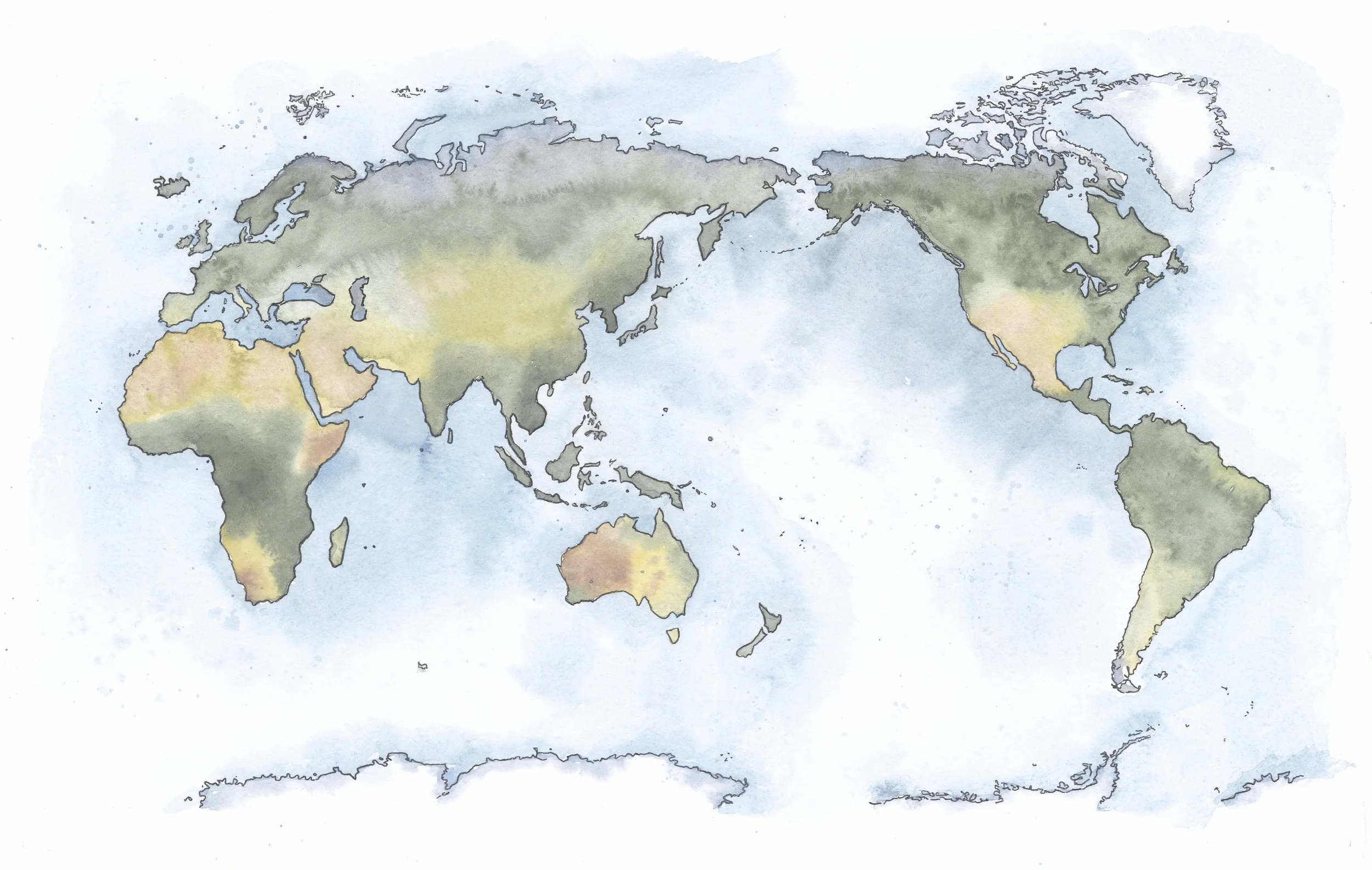
We frequently update our list of groups to watch. You can contribute to an up-to-date, interactive map by emailing outreach@braidedriver.org.
Africa
Morocco—The Moroccan Biodiversity & Livelihoods Association (MBLA) supports the Indigenous Amazigh community of the High Atlas region in practicing traditional conservation through community-based management of pasture, farming on agricultural terraces, and wild plant use.
South Africa—Local Nama farmers are reverting to raising heritage breeds of sheep and goats rather than imported commercial breeds, because heritage livestock’s grazing practices are more adaptable and less damaging to the increasingly arid natural environment.
Uganda—The Bakonzo people manage flood risks in the Nyamwamba watershed practically, by planting native plants and trees to create flood-immunizing barriers, and spiritually, through cleansing rituals led by a traditional medium. This builds flood awareness and supports a return to community tranquility after disasters.
Kenya—On Pate Island, a group of local women who call themselves “Mangrove Mothers” are countering years of overlogging and environmental effects, including coastal erosion and dwindling fish supplies. They started a tree nursery and have planted over 50,000 seedlings to help restore the land.
Asia
India—The Malayalis People in Kuttanad practice paddy farming below sea level, relying on a resilient, low-energy, low-cost way to raise both crops and waterfowl. Using artificially created landforms called Kayalnilam to harness and accommodate seasonal flooding, they live in relationship to the water around them.
Malaysia—Suluk people in the fishing village of Mumiang use seasonal cycles and the lunar cycle, not tidal charts, to set a sustainable and efficient rhythm for living in relationship with the Kinabatangan River. The fresh water flowing from flooded rivers during monsoon seasons preserve the health of penned fish farms without the use of chemical pesticides.
Australia and Oceania
Australia—The Paruku Indigenous Protected Area is the government-recognized home for the Walmajarri Peoples, who manage the land themselves. Their self-governance objectives are rooted in culture and spirituality, with the aim to protect the area’s lakes, establish food security, and grow economically.
Fiji—The Lau Seascape project utilizes traditional Lau “no take zones” to support healthy fish populations and provide refuge for migrating species during breeding.
Europe
Finland—The Snowchange Cooperative trains young ice fishers to counter and manage the deepening climate change impacts through traditional practices including seining, restoring local waterways, and building pinelog structures.
North America
United States—The Coeur d’Alene Tribe is bringing back water potatoes, a traditional source of harvested food, and cultivating the local wetlands where they grow best. A new generation of climate resistance coordinators are utilizing the wisdom of past generations to restore native grasses, bring back beaver and salmon, repair stream channels, and make the natural area more resilient by encouraging interconnected ecosystems.
United States—On what is now called Long Island, New York, members of the Shinnecock Nation face rising sea levels on their low-lying traditional lands. They are responding in traditional ways, using nature-based solutions including sand, boulders, beach grasses, and oyster reefs to blunt tidal energy.
South America
Venezuela—Women from the Kariña community created Tukupu, the area’s first Indigenous forestry business. The Imataca Forest Reserve had been devastated by mining and unregulated logging, but Tupuku supports the community’s traditional nomadic lifestyle, moving often so that nature can recover, and planting food crops alongside trees, to ensure food security.